MENTAL HEALTH IN HIGH SCHOOL
33%of U.S. high school students experienced persistent feelings of sadness or hopelessness during the previous year.
CDC · 2025 Youth Risk Behavior Survey (opens in a new tab)FUTUREWOVEN™ BY THE THREAD MOVEMENT
FOR HIGH SCHOOL + COLLEGE STUDENTS
Bring your story.
Discover what you can weave.
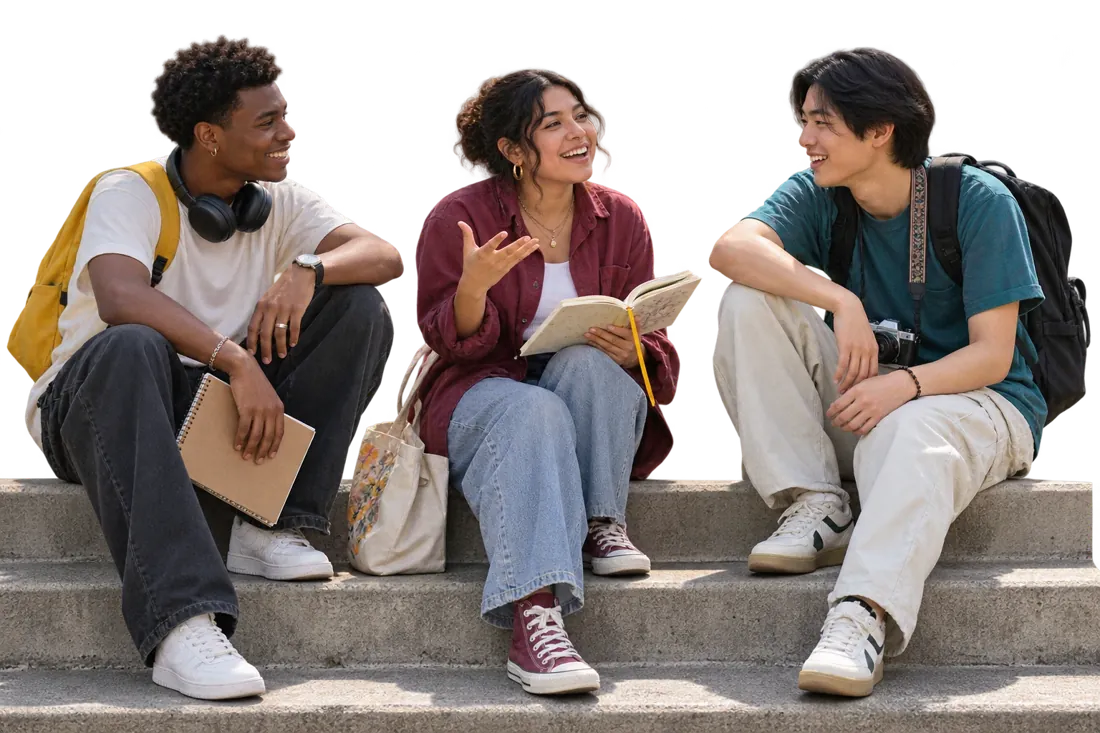
FutureWoven is an eight-week, arts-based learning and mentoring experience designed to support young people’s mental health and well-being by nurturing curiosity, courage, and connection.
EIGHT WEEKS · TWO HOURS A WEEK · A PLANNED COHORT OF 20 STUDENTS
EVERY QUILTING SKILL LEVEL WELCOME
Through quiltmaking, storytelling, peer learning, and community contribution, high school and college students explore the experiences shaping them, recognize their strengths, and practice ways to navigate challenges and build meaningful relationships.
Developed by The Thread Movement and shaped by listening to more than 100 students, the planned pilot brings young people, facilitators, mentors, and community partners together to connect inner growth with opportunities to learn, contribute, and explore what comes next.
THE CHALLENGE
Growing up brings questions that rarely fit neatly into a school assignment: “Who am I becoming?” “Where do I belong?” “Who can I turn to?” “What could I try next?”
Many young people carry other people’s expectations alongside questions of their own. Financial pressures, family responsibilities, limited opportunities, and uncertainty about the future can leave little room to explore them.
Over time, experiences can harden into conclusions: “I’m not good at this.” “People like me don’t get those opportunities.” “I should be able to handle it myself.” Familiarity can make these conclusions feel settled, even when there is more to understand.
Young people need places where their questions are taken seriously, their strengths are noticed, and support is within reach: places to explore how they see themselves, practice responding to difficulty, and discover what they can contribute.
FutureWoven is being developed to create that kind of learning space, particularly for young people from under-resourced communities.
The program grows out of nine months of listening. Through the Katherine Harvey Fellowship, The Thread Movement conducted a listening tour, community engagement, and volunteer work with more than 100 students in 2026. What students shared continues to shape the program’s design.
These studies describe different student populations and provide context for the program, not evidence of its results.
of U.S. high school students experienced persistent feelings of sadness or hopelessness during the previous year.
CDC · 2025 Youth Risk Behavior Survey (opens in a new tab)of college students participating in the survey screened positive for moderate or severe depressive symptoms.
Healthy Minds Study · 2024–2025 (opens in a new tab)of surveyed Gen Z middle and high school students did not agree that a teacher or another adult at school recognized their talents and interests.
Walton Family Foundation–Gallup · 2026 (opens in a new tab)of college students responding to the survey, across 91 participating colleges, experienced food or housing insecurity.
The Hope Center · 2023–2024 survey (opens in a new tab)of college students responding to the same Hope Center survey reported lacking awareness of available supports.
The Hope Center · 2023–2024 survey (opens in a new tab)Screening results reflect symptoms students reported on a questionnaire, not diagnoses. Together, these findings underscore why opportunities for inner growth need to sit alongside supportive relationships and attention to practical needs.
WHAT YOU HEAR. WHAT WE SEE.
The things people say about you can shape what you notice about yourself. Sometimes, looking again begins with a question. An everyday interest may offer clues about what draws your attention, how you learn, where you find connection, or what you want to understand. We want to hear what it means to you. Tap a patch or a statement to explore another perspective.
LOOK CLOSER
What draws you in: solving a problem, improving through practice, exploring a story, or being part of a team?
POSSIBILITIES TO EXPLORE
Strategy, persistence, collaboration, and responding to setbacks. These interests might also lead you toward game design, technology, or project coordination.
Add your perspective →LOOK CLOSER
Are you creating, learning, keeping people close, or looking for somewhere to belong? How do you feel afterward?
POSSIBILITIES TO EXPLORE
Connection, communication, creative expression, and choosing boundaries that support your well-being. Related interests might include media, design, or community organizing.
Add your perspective →LOOK CLOSER
What are you trying to understand? What do you do when the first attempt doesn’t work?
POSSIBILITIES TO EXPLORE
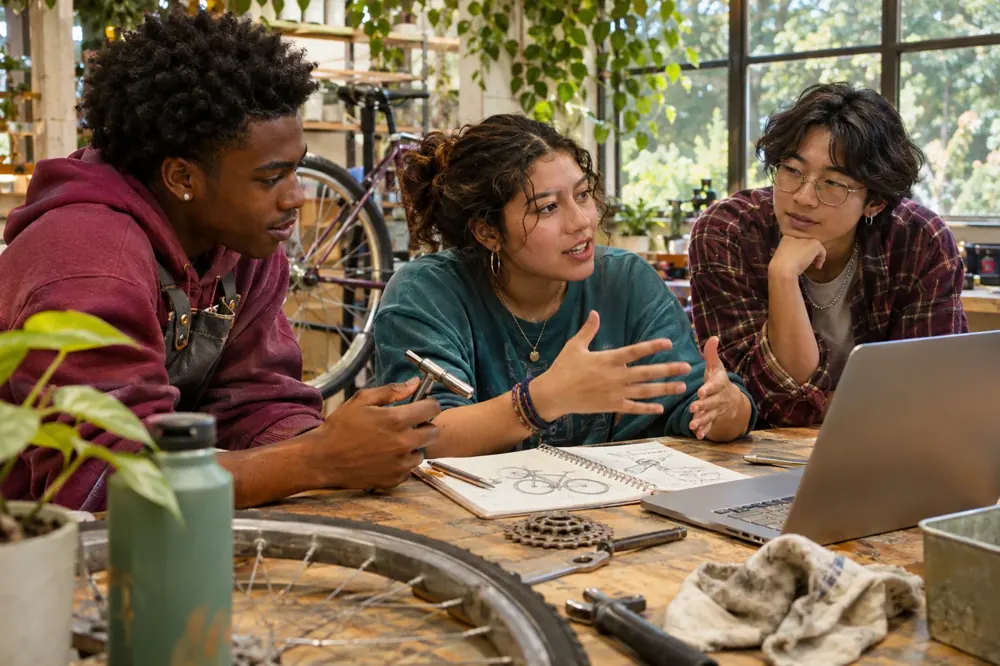
Curiosity, patience, experimentation, and problem-solving. These interests might connect with engineering, skilled trades, mechanics, or product design.
Add your perspective →LOOK CLOSER
What do images help you notice, understand, or express?
POSSIBILITIES TO EXPLORE
Imagination, observation, visual thinking, and communicating ideas. Related interests might include illustration, architecture, animation, or design.
Add your perspective →LOOK CLOSER
What catches your attention? What questions arise when you give yourself time to notice?
POSSIBILITIES TO EXPLORE
Wonder, reflection, observation, and your relationship with nature. Related interests might include astronomy, environmental science, aviation, or research.
Add your perspective →These statements come from students we listened to during the Katherine Harvey Fellowship, shared anonymously with their permission. The perspectives that follow are invitations to explore, not predictions; an interest can hold many meanings.
OUR APPROACH · COURSE OVERVIEW
The Thread Movement is developing FutureWoven, an eight-week, arts-based learning and mentoring experience for high school and college students. Its purpose is to nurture curiosity, courage, and connection: capacities young people can draw on to understand their inner lives, build relationships, and take thoughtful action, in support of their mental health and well-being.
The space we are creating is creative, not clinical: a place for imagination, reflection, and connection. Participants learn through peer learning with facilitator and mentor support. School, work, relationships, and community life are where they put that learning into practice.
FutureWoven is not a sewing program. Quilting is the medium. The work is decision-making, skill building, mentoring, and learning.
Quilting gives us a way to work with what we carry. A piece of fabric might represent a memory, a question, a strength, or a hope. As participants choose, arrange, and stitch their pieces, they explore the meanings they have given their experiences and what they want to make of them now.
Alongside peers, participants encounter stories and perspectives different from their own and practice listening, making choices, asking for help, and contributing to shared work. Each quilt becomes a record of what its maker is noticing, practicing, and discovering.
Every quilting skill level is welcome. You’ll learn as you go.
Each capacity grows through two of the six T.H.R.E.A.D. practices.
CURIOSITY
Explore what matters to you, what has shaped your story, and what your experiences can teach you. Listen to another perspective and leave room to discover something you hadn’t considered.
Through Think Deeply and Harvest Wisdom
COURAGE
Notice what happens when you feel unsure, disappointed, or under pressure. Practice another way to respond, try something unfamiliar, and use what happens to guide your next attempt.
Through Release Patterns and Adopt Change
CONNECTION
Practice listening, asking for support, and recognizing what you can offer. Explore how your goals, relationships, responsibilities, and well-being fit together.
Through Enlist Allies and Design Wholeness
Each two-hour gathering connects personal exploration with shared practice.
Participants work toward one intended learning outcome for each T.H.R.E.A.D. practice.
Skills participants explore and practice through each T.H.R.E.A.D. practice, with uses in friendships, family life, school, work, and community.
We are working with schools, colleges, employers, and community organizations to connect participants’ learning with opportunities beyond the program. This includes developing pathways for eligible community service hours, exploring bridges to college credit through institutional assessment of prior and experiential learning, and helping participants build portfolios that make their skills and contributions visible.
These pathways are being developed with partners. Each participant’s school or organization decides which activities meet its service-hour requirements, and any college credit is determined and awarded by the participating college through its own assessment process.
Schools, families, employers, and community organizations can also help connect participants with mentors, resources, learning opportunities, and places to contribute. We work with participating partners to adapt the experience to the young people involved, their setting, and their needs.
Your quilt tells a story of what you are discovering. Your portfolio helps you show what you have practiced, contributed, and learned.
Over eight weeks, participants work toward a learning quilt and an accompanying skills portfolio that can bring together:
Participants can draw on their portfolios when preparing applications, discussing their experience with mentors or employers, or pursuing institution-approved recognition of experiential learning.
Your questions, your ideas, and yourself. You choose what you share. Making, listening, asking questions, and reflecting are all ways to participate.
THE T.H.R.E.A.D. SYSTEM
Each practice strengthens curiosity, courage, or connection. Use them at school, at work, in your relationships, and in your community.
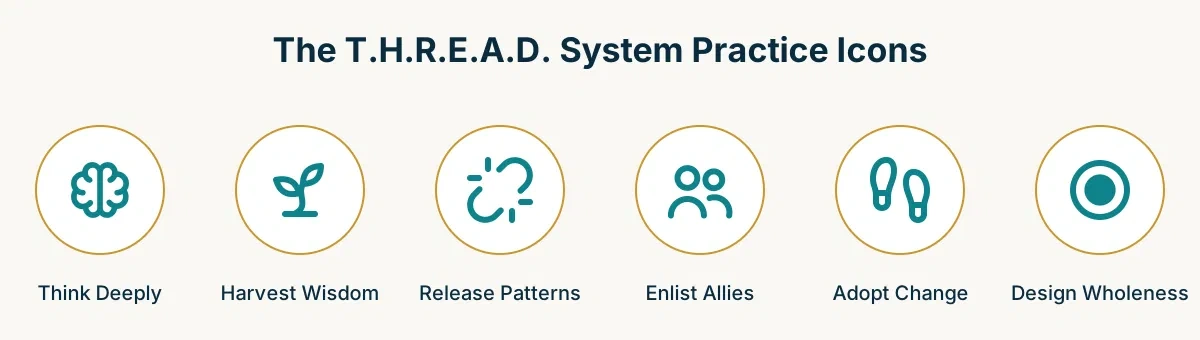
Think Deeply
Make room to hear your own thinking and examine the expectations shaping it. When everyone has an opinion about your future, what do you think?
Builds curiosity
Separate what you know, what you believe, and what you still want to understand about a question you are carrying.
Your learning patch: A question seen more clearly.
Try this practice →Harvest Wisdom
Look back for strengths, lessons, and support you may have overlooked. Learning happens in classrooms, at home, at work, and when things don’t go as planned.
Builds curiosity
Represent a meaningful experience through fabric, words, or an image. Name what you want to carry forward.
Your learning patch: Wisdom worth keeping.
Try this practice →Release Patterns
Notice a familiar reaction with care. Maybe you go quiet, put things off, or agree before thinking about what you need. Explore whether another response could serve you better.
Builds courage
Choose an everyday moment of avoidance, frustration, or comparison. Pause and practice a different response.
Your learning patch: A pattern noticed and a choice explored.
Try this practice →Enlist Allies
Recognize the people and resources you can turn to, and the support you can offer. Practice asking for help, building trust, and finding what you need.
Builds connection
Create an allies-and-resources map. Prepare one question or request for someone you trust.
Your learning patch: A connection to build.
Try this practice →Adopt Change
Choose a manageable experiment. Pay attention, invite feedback, and adjust. You can learn about a direction before deciding how far to follow it.
Builds courage
Test an idea, explore an unfamiliar activity, or practice a conversation. Reflect on what the attempt taught you.
Your learning patch: Learning from an attempt.
Try this practice →Design Wholeness
Consider how a choice fits within your whole life and affects the people connected to it: your goals alongside your time, money, relationships, and well-being.
Builds connection
Create a next-step plan that includes practical needs, support, and time to reflect and adjust.
Your learning patch: A step you can carry into life.
Try this practice →Activities are adapted with the participating school or organization. The skills listed are areas participants will explore and practice.
YOUR LEARNING JOURNEY
Bring an experience, an idea, or something you want to understand. A guided starting-point reflection helps you notice what you are carrying and choose where to begin.
For two hours each week, create alongside peers, learn with facilitators and mentors, try the six practices, and work on a shared community project. Add discoveries, questions, feedback, and examples of your learning to your quilt and portfolio.
Leave with your learning quilt, a skills portfolio, a record of your community contribution, and a supported next-step plan: something to keep exploring, someone to connect with, and an action to try.
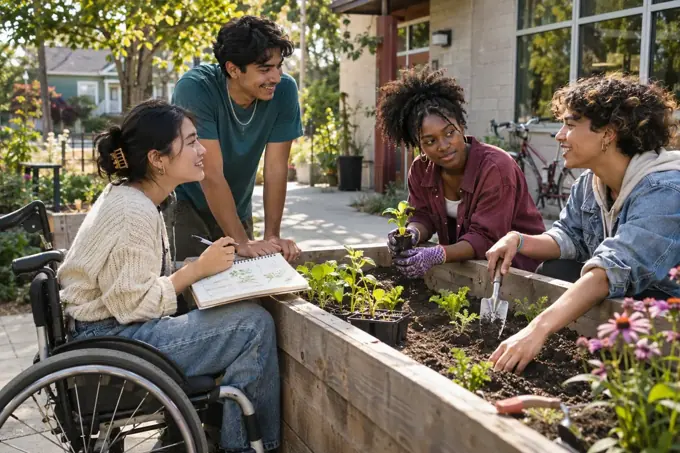
YOU’RE NOT DOING THIS ALONE
New situations bring new questions. The experience includes plans for refresher sessions and opportunities to reconnect, revisit the practices, and share what you are discovering.
Follow-up conversations will also help us understand which practices participants use, where difficulties remain, and what additional support could help.
Along the way: journaling, time in nature, creative practice, community, mentors, and future-self planning.
EXPLORE TECHNOLOGY · ENVISION YOUR FUTURE
Who are you becoming? What would you like to learn, contribute, or make possible? Use the future-self planning tool to gather reflections, connect ideas, and explore a possibility. Consider the strengths you can draw on, the people who could help, and a step you can try.
Your plan can include education and work alongside relationships, community, and the things that give your life meaning. It can become one page of your skills portfolio.
Explore your future-self plan →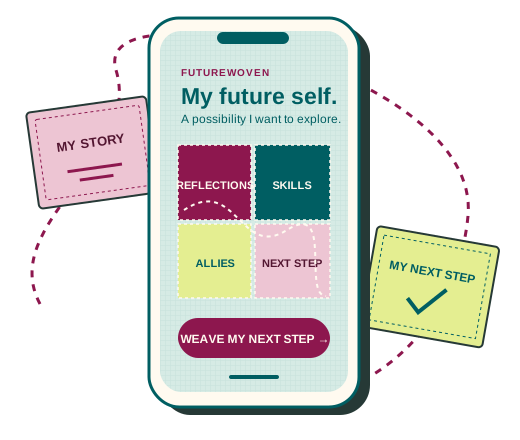
YOUR EXPERIENCE → YOUR NEXT POSSIBILITY
Explore an example or build your own future-self plan. Your entries stay on this open page and are not sent to us; download a copy to keep them.
Illustrative example for exploration.
Your entries stay private in this open page and clear when you close or reload it. Download a copy to keep it.
A community project can be one starting point. Learning, relationships, work, and contribution inform one another, and your route can turn, loop back, and open new possibilities. Pathways and preparation requirements vary.
FREQUENTLY ASKED QUESTIONS
High school and college students who want space to explore their experiences, connect with others, and try new possibilities. The planned pilot will give particular attention to young people from under-resourced communities.
No. FutureWoven is not a sewing program; quilting is the creative medium for decision-making, skill building, mentoring, and learning. You’ll learn what you need as you go. Each piece of fabric can represent something you have lived, learned, or want to explore.
Through the Katherine Harvey Fellowship, The Thread Movement spent nine months in 2026 on a listening tour, community engagement, and volunteer work with more than 100 students. Their questions, experiences, and feedback inform the program, and the statements on this page are theirs, shared anonymously with permission.
Eight weeks, with two hours together each week.
The planned cohort includes 20 students, learning together through peer learning with facilitator and mentor support.
You choose what you share. You can take part through making, listening, asking questions, and reflecting.
Make a learning quilt, explore stories and questions, practice T.H.R.E.A.D., learn with peers and mentors, and contribute to a shared community project.
You’ll explore how technology can help you picture your future self, gather reflections, connect ideas, and develop a next-step plan. The future-self planning tool on this page offers one place to begin.
We are working with partners to identify eligible community project activities. Your school or organization will determine which activities meet its requirements.
We are exploring partnerships that could help participants present their learning for consideration through a college’s prior or experiential learning assessment process. Any credit would be determined and awarded by the participating college under its own requirements.
Your learning quilt, an accompanying skills portfolio, a record of your community contribution, and a supported next-step plan. Together, these help you explain what you have explored, practiced, and learned.
The experience includes plans for refresher sessions and follow-up opportunities to revisit the practices and share your progress.
No. FutureWoven is an educational and mentoring experience designed to support mental health and well-being. The space we are creating is creative, not clinical: a place for imagination, reflection, and connection. It does not provide counseling, therapy, or clinical treatment.
Contact us about participating, bringing FutureWoven to your school or organization, mentoring, volunteering, or supporting a cohort.
YOUR NEXT STEP
Bring your questions, your ideas, and the pieces of your story you want to explore. Let’s see what takes shape together.
Explore the Experience →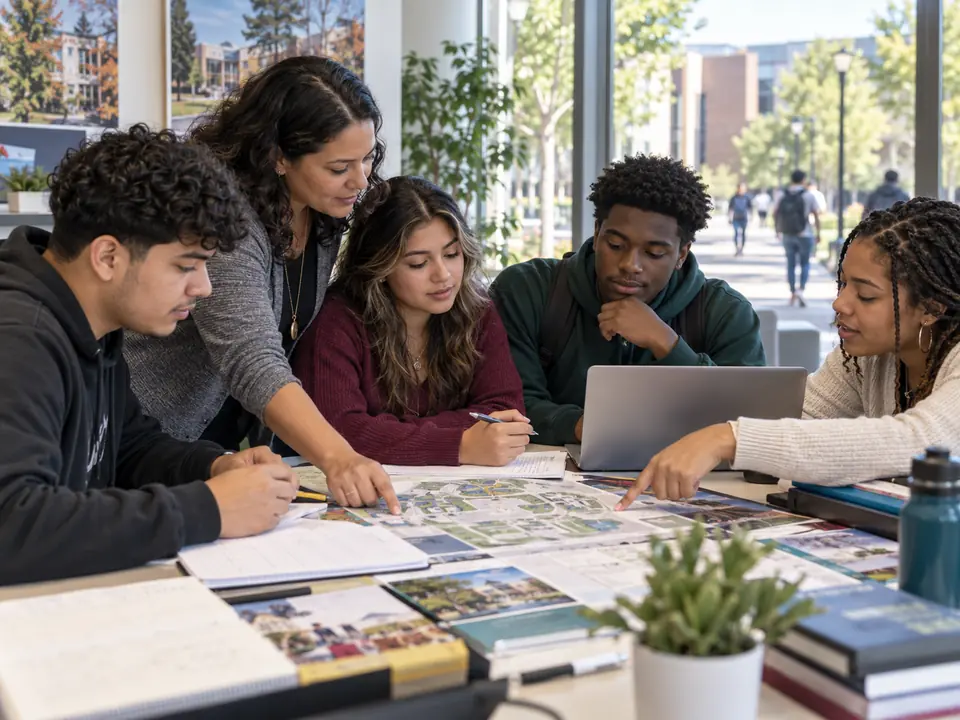
FOR SCHOOLS, COMMUNITY PARTNERS + SUPPORTERS
FutureWoven is being developed as an eight-week creative learning and mentoring experience that supports young people’s mental health and well-being through inner growth, meaningful relationships, and purposeful action. Each cohort combines quiltmaking, storytelling, peer learning with facilitator and mentor support, the six T.H.R.E.A.D. practices, and a shared community project.
We welcome schools, colleges, employers, and community organizations that can help shape a responsive pilot, particularly in under-resourced communities. Partners might:
We work with each partner to agree on roles, adapt the experience to its setting, and share what participants are learning.
FOR PARENTS + CAREGIVERS
FutureWoven is an educational, arts-based learning and mentoring experience. The space we are creating is creative, not clinical; it does not provide counseling or therapy. Participants learn in a small group of peers, guided by facilitators and mentors, and choose what they share.
Before enrollment, families will receive confirmed details on:
FOR FUNDERS + SUPPORTERS
FutureWoven pairs creative practice with mentoring and peer learning so young people can build curiosity, courage, and connection alongside practical support. Its design is informed by a listening tour, community engagement, and volunteer work with more than 100 students through the Katherine Harvey Fellowship. It is at the pilot-planning stage and grounded in the T.H.R.E.A.D. System, created by The Thread Movement’s founder, Dr. Leonie H. Mattison.
Support can help provide facilitation and mentoring, quilting and learning materials, accessible spaces and technology, community project resources, participant assistance, and evaluation.
The Thread Movement is fiscally sponsored by the Santa Barbara Foundation.
ENLIST ALLIES · HELP BUILD THE GUIDE
Think of a young person whose interests were misunderstood, whose strengths went unnoticed, or whose questions needed someone willing to listen. What would you ask? What support or opportunity could you help them explore?
We’re gathering community perspectives to build a guide connecting young people’s interests and experiences with strengths, supportive relationships, transferable skills, learning pathways, work, and community contribution. Choose a statement and share what you would ask.
Curiosity to look closer. Courage to try. Connection to grow together.
LEARNING WHAT MAKES A DIFFERENCE
FutureWoven is in development. Through a planned pilot, The Thread Movement will explore how participants develop and use curiosity, courage, and connection, and how they describe their sense of possibility, belonging, and well-being.
We will learn from participant reflections, learning quilts and portfolios, creative work, community projects, facilitator observations, and feedback before and after the experience. We also plan to document participation, mentoring connections, next-step plans, and follow-up feedback.
These are intended outcomes, not documented findings. FutureWoven has not yet demonstrated effects on mental health or well-being. We will report findings as evidence becomes available, distinguishing participants’ own perspectives, demonstrated learning, and measured changes.